
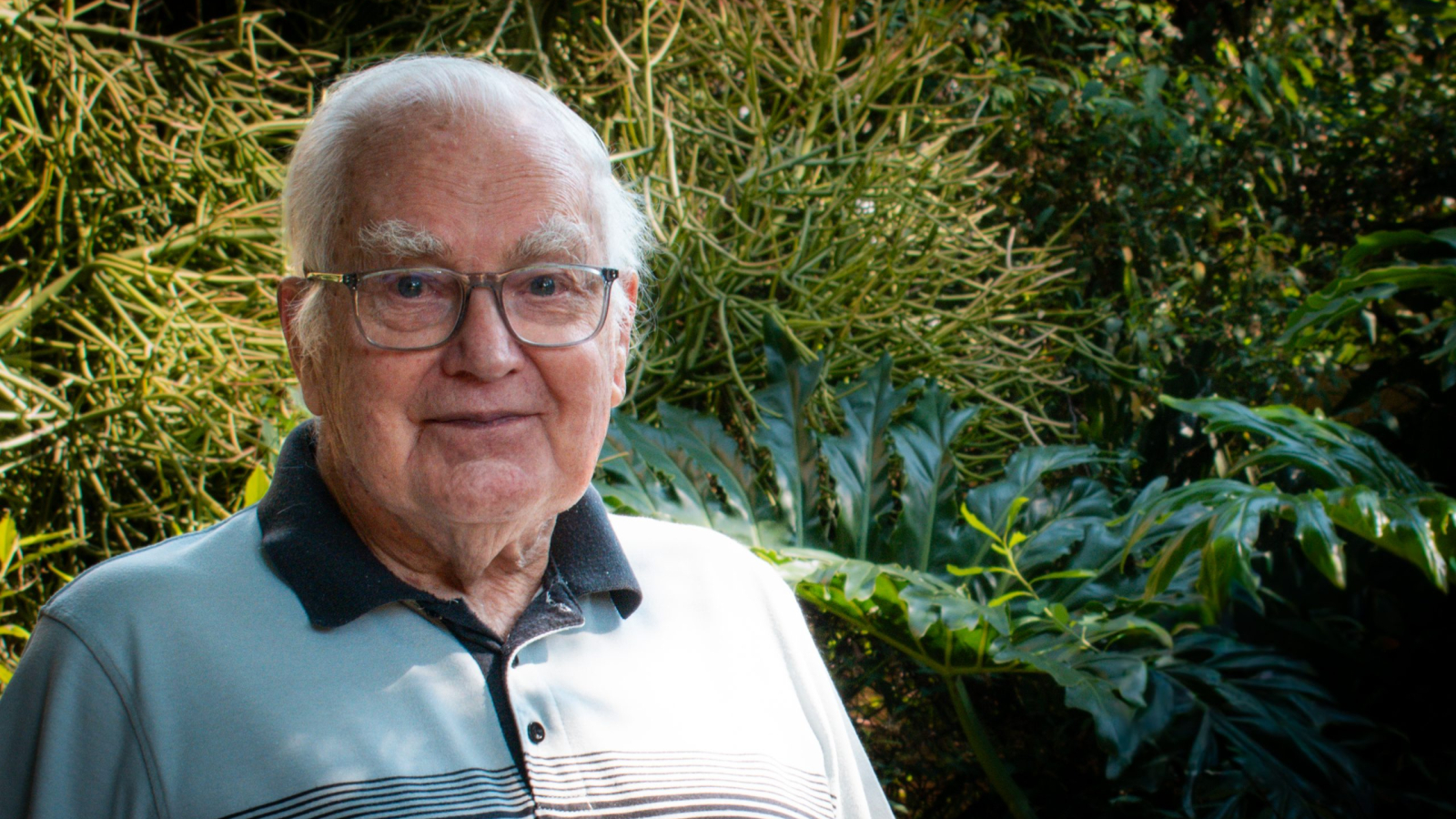
Malcolm’s love affair with the mountains began almost before he was old enough to understand it. At nine years old, he joined his father on his first overnight camping trip in the Drakensberg. Equipment was scarce in those days, and his father improvised a tent from a cotton bedsheet stretched between two poles. It was hardly weatherproof, but for a young boy it was a gateway into a world of adventure.
That first night left a memory he would never forget. Lying awake in the darkness, he heard a deep rumbling noise outside the tent and became convinced that a lion was prowling nearby. Only later did he discover the terrifying sound was nothing more than his father’s snoring.
The mountains quickly became woven into the fabric of his childhood. When Malcolm was eleven, he accompanied his father into remote regions of the Drakensberg, including the MNweni and Ntonjelana areas. His father was engaged in a labour of love; mapping and documenting the Drakensberg mountains. He received no payment for the work. Driven purely by curiosity and passion, he spent countless hours surveying valleys, measuring ridges, and creating detailed maps and scale models. Mountain hotels often hosted the family in return for his efforts.
Adventure was deeply ingrained in his father’s character. Before settling in Estcourt as headmaster of the local high school in 1939, he and Malcolm’s mother had spent four months travelling through East and Central Africa in a small Ford motorcar. Exploration was not something he did, it was who he was.Living in Estcourt placed the Drakensberg within easy reach. Just an hour away, the mountains became the family’s playground. Malcolm still remembers visits to places like Stable Cave, where towering cliffs, long grass, forests, and sweeping views stirred a sense of wonder that never left him. The Drakensberg was never simply scenery. It became the setting for family adventures and the place where his bond with his father was forged.
The equipment they used now seems remarkably primitive. Malcolm’s first backpack was handmade by his mother from cream-coloured calico and fitted with shiny silver buckles. It was small, offered little protection from the weather, and carried only the bare essentials. His father used a traditional canvas and leather Bergan rucksack, considered advanced at the time but awkward under heavy loads.Years later Malcolm discovered a revolutionary Canadian backpack designed by orthopaedic specialists. Unlike traditional packs, it carried weight high above the shoulders, making difficult terrain far easier to negotiate. He used it for nearly thirty years and often amazed fellow hikers with the ease with which he crossed rivers and rough ground while carrying a full load.
Sleeping arrangements were equally basic. Malcolm’s father had imported fine sleeping bags from England, while Malcolm relied on a homemade version fashioned by a local saddle maker from military canvas and thin felt. It offered little warmth. After hearing repeated complaints about freezing nights in the mountains, his mother added a thick woollen blanket to his kit, a welcome luxury that accompanied him on many future expeditions.
Because equipment was heavy and cumbersome, mountain hotels frequently supplied local porters to accompany their journeys. One carried food while the other helped transport equipment. Their assistance allowed father and son to venture far deeper into the wilderness than they could have managed alone. Camping itself was wonderfully simple. Upon reaching camp, one of the porters would cut armfuls of fresh grass with a sickle and spread it thickly inside a cave or tent to create a surprisingly comfortable mattress. Cooking was done over open fires. Stones formed makeshift stoves, while billy cans hung above glowing coals on steel rods. Protea wood burned hot and long into the evening.
Keeping equipment dry was a constant battle. Waterproof materials were rare, and rain often soaked everything. Whenever possible they sought shelter in caves. Yet nobody complained. It was simply part of mountain life.
The greatest challenges came not from discomfort but from the mountains themselves. Weather, lightning, storms, and isolation posed the real dangers. There were no cell phones, GPS devices, emergency beacons, or rescue helicopters standing by. Once hikers entered the mountains, they were largely on their own.
Yet one fear that seems common today was almost entirely absent and that is the fear of other people. Malcolm remembers shepherds and local communities as friendly and generous. During solo journeys across the escarpment, he often shared tea and conversation with Basotho herders tending livestock in remote areas. Hospitality and mutual respect characterised nearly every encounter.
Communication with home required ingenuity. During long solo traverses, Malcolm sometimes used the flash of his camera to signal from high points along the escarpment. Farmers and hotel staff in the valleys below had been alerted to watch for the flashes. If they saw one, they telephoned his parents to confirm he was safe. It was a simple system, but remarkably effective.
What stands out most when Malcolm reflects on those years is the confidence with which he travelled. The mountains never felt threatening. He knew the terrain intimately and trusted his own experience. More importantly, he trusted his father completely.
That trust developed long before detailed maps existed. Navigation relied largely on observation and instinct. Together they learned to read the landscape and the shape of ridges, the course of rivers, and the patterns of valleys. Often they climbed simply to see what lay beyond the next rise. Sometimes they found themselves racing fading daylight while searching for safe routes through sandstone cliffs.
No matter how uncertain the route appeared, Malcolm never doubted that his father would find a way.One of his fondest memories involves his father’s boots. Handmade by a blind bootmaker in Pietermaritzburg, they were masterpieces of craftsmanship, fitted perfectly after several careful fittings. Metal studs embedded in the soles left distinctive footprints. Whenever Malcolm lost sight of his father on the trail, he simply followed those familiar marks pressed into the earth.
As the years passed, Malcolm watched the mountains change. Once prominent contour paths used by rangers, forestry workers, and horse patrols gradually disappeared beneath vegetation and erosion. Areas that had once been easily traversed became overgrown and difficult to navigate. Yet despite these changes, he believed something else had altered even more significantly and that is the spirit of exploration.
Earlier generations often wandered off established routes simply to discover what lay beyond the next ridge. Modern hikers, he felt, were more likely to remain on recognised trails. Technology had made travel easier but perhaps reduced the sense of discovery.
No discussion of Malcolm’s life can be separated from the influence of his father. His father feared that writing about the Drakensberg might bring too many visitors into fragile wilderness areas, particularly ancient rock-art shelters. Yet he also recognised the need to document a landscape about which very little reliable information existed.
His research was meticulous. He spent years studying archives, interviewing pioneers, reading journals, and collecting stories. The resulting book became far more than a hiking guide. It evolved into a definitive record of the Drakensberg’s geography, history, people, weather, wildlife, and exploration.
The same curiosity drove his mapping projects. Armed with surveying instruments mounted on portable tripods, he painstakingly measured angles and distances across the range, producing some of the first truly detailed maps of the mountains.
Underlying everything was an insatiable hunger for knowledge.Even in old age that curiosity never faded. One of Malcolm’s last memories of his father came when he was ninety-five years old. Preparing for a medical procedure in Johannesburg, he was still bustling around the garden giving instructions about where marigolds should be planted and what work needed attention while he was away.
He never returned home.
Complications and infection followed the procedure. Although he recovered sufficiently to leave intensive care, he never again set foot in the mountains he loved. Yet his mind remained razor-sharp. During visits Malcolm found him eagerly discussing developments in science, medicine, law, and current affairs. When staff offered him lighter reading material, he was almost offended. At ninety-five, he still craved intellectual challenge.
Eventually a fall and head injury brought his remarkable life to an end. Yet there had been no mental decline. His curiosity endured until the very last day.
Looking back, Malcolm sees two versions of his father. During school terms he was the busy headmaster consumed by disciplined and responsibility. Then the holidays arrived, and another man emerged. The father of campfires, mountain walks, and Sunday adventures.
Those Sundays became treasured rituals. After church Malcolm would rush to change clothes and climb into the family car. Together they explored rivers, valleys, caves, and hillsides. It was during these outings that their relationship deepened.
His father possessed a rare gift for understanding people. Discipline was never harsh. Instead, lessons were delivered quietly and thoughtfully.
When Malcolm once tricked his sister by offering her toilet water in a lemonade bottle, his father simply sat him silently on his lap beside the fire. No shouting. No punishment. The uncomfortable silence conveyed the lesson more effectively than any lecture could have.
On another occasion Malcolm brought home a penknife he had taken from school. Rather than scolding him, his father accompanied him back to the classroom and gently explained how disappointed the owner would feel at losing something precious. Again, empathy achieved what punishment never could. The same wisdom shaped Malcolm’s love of reading. As a boy, he cared far more about sport than books. Rather than forcing him to read, his father took him to a bookshop and allowed him to choose three books entirely for himself. The freedom of that choice ignited a lifelong passion for literature.
Throughout adulthood, Malcolm continued turning to his father for advice. Whether facing career decisions, financial challenges, or family responsibilities, his father remained a trusted counsellor and guide.
The title of Malcolm’s memoir, All the Hills Are Home, captures the philosophy that emerged from these experiences. Although he occasionally experimented with rock climbing, his greatest joy was always found in walking, following rivers, crossing passes, and exploring landscapes at a slower pace.
This preference shaped his later adventures in the Himalayas. Rather than chasing dangerous summits, he led trekking expeditions through some of the world’s most spectacular mountain regions. Over eighteen journeys he visited places such as Everest Base Camp and remote corners of Nepal and Tibet. The mountains offered challenge and wonder without the need for conquest.
The title itself came from a line in a poem he read decades ago. Though he could never find the poem again, one phrase remained lodged in his memory: “For all the hills are home.”
Those words perfectly expressed his relationship with mountains everywhere. The memoir itself was born during the COVID-19 pandemic. When travel was halted and expeditions were cancelled, Malcolm suddenly found himself with time. Encouraged by his son Robin, he began recording the stories of a lifetime.
At first he wrote about the Himalayas. The memories were recent and well documented through journals and trip reports. But eventually his thoughts drifted back to where it all began. The Drakensberg and the father who had introduced him to the mountains.
As those memories resurfaced, they flowed effortlessly onto the page.
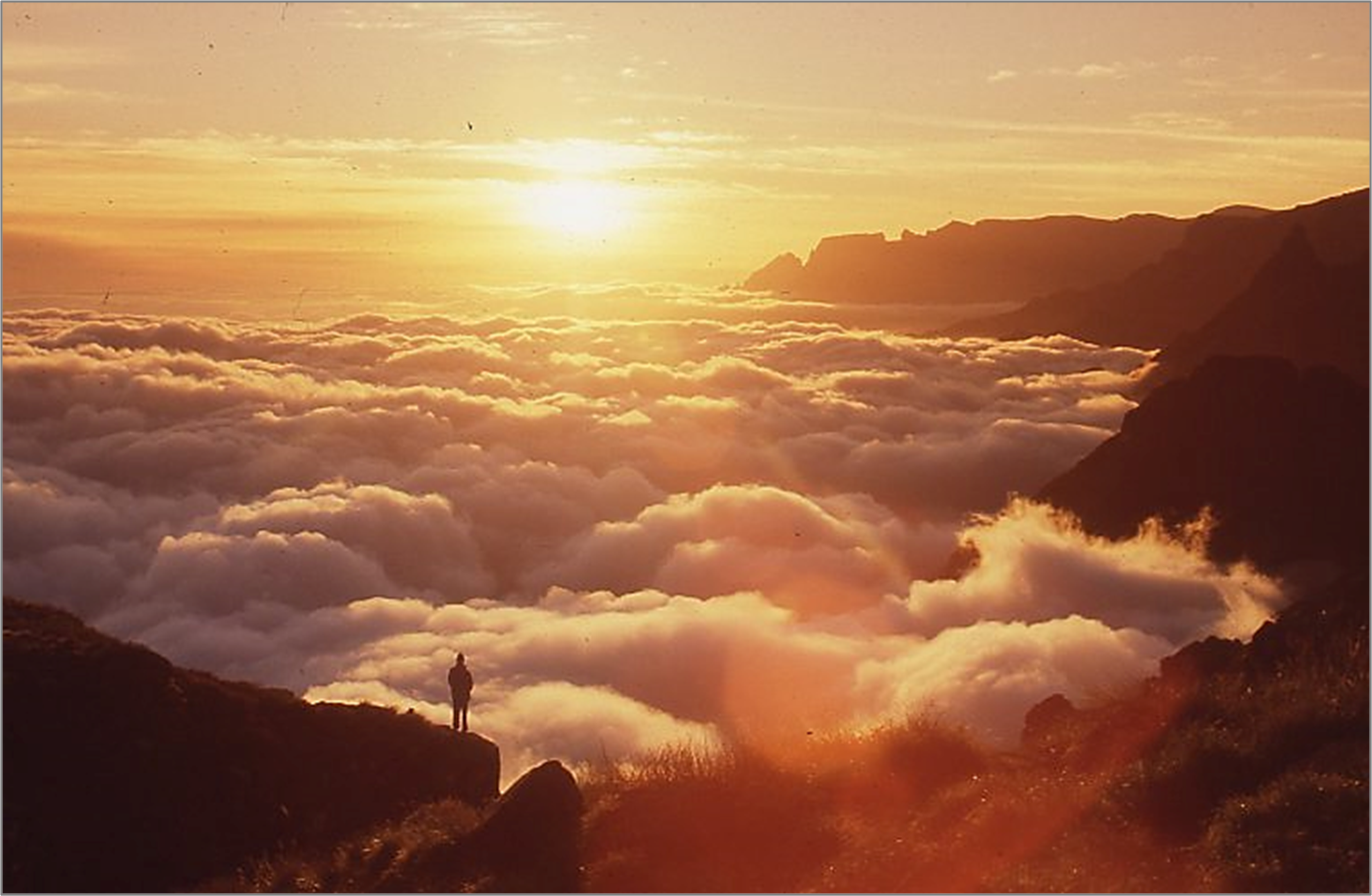
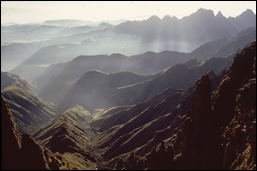
Photography played an important role in that story. A small camera purchased in Nairobi in 1932 became one of Malcolm’s most treasured possessions. While his father used sophisticated equipment, photography taught Malcolm to see the landscape differently. He rose before dawn to capture first light on the escarpment, studied shadows moving across cliffs, and searched constantly for beauty in changing conditions.
His father often handed him the camera and encouraged him to take the photograph instead.
“He always said I was the better photographer,” Malcolm recalled. Whether true or not, the encouragement gave him confidence.Living in the shadow of such an accomplished father was not always easy. Everywhere Malcolm went he was introduced as the son of Reg Pearse. While the association opened doors, he was determined to build a life on his own terms. Rather than following his father into education, he forged a path through ministry, guiding, writing, photography, and travel.
The love of mountains passed to the next generation as well. His daughter Helen became an enthusiastic hiker during her university years and eventually met her future husband through mountain adventures. Later, however, hypermobility syndrome robbed her of the ability to walk in the mountains she loved.
Age eventually imposed similar limits on Malcolm himself. After decades of Himalayan expeditions and Drakensberg traverses, he found that even short walks required effort. There was no bitterness in his acceptance.
“One day,” he reflected, “your body simply tells you those days are finished. “Yet his curiosity remained intact. When asked how he wished to be remembered, Malcolm’s answer was simple. He hoped people enjoyed reading his stories. Throughout his life as a minister, guide, photographer, teacher, and writer, he had tried to enrich the lives of others. If his books gave readers pleasure, inspiration, or a deeper appreciation of the natural world, that was enough.
And when asked what image best captured the Drakensberg, he did not speak of peaks or cliffs.
He spoke of water.
The sound of streams running over stone. Crystal-clear pools reflecting sunlight. Waterfalls tumbling through hidden valleys.
“There’s life there,” he said quietly. “It’s alive.”
Perhaps that was why the mountains always felt like home. Not because of their grandeur, but because they were living places that had shaped his childhood, inspired his life’s work, and remained part of him long after his walking days were over.
Add a Comment